Huntington Beach Legal Victory on Gender Secrecy in the Classroom
Huntington Beach Legal Victory on Gender Secrecy in the Classroom
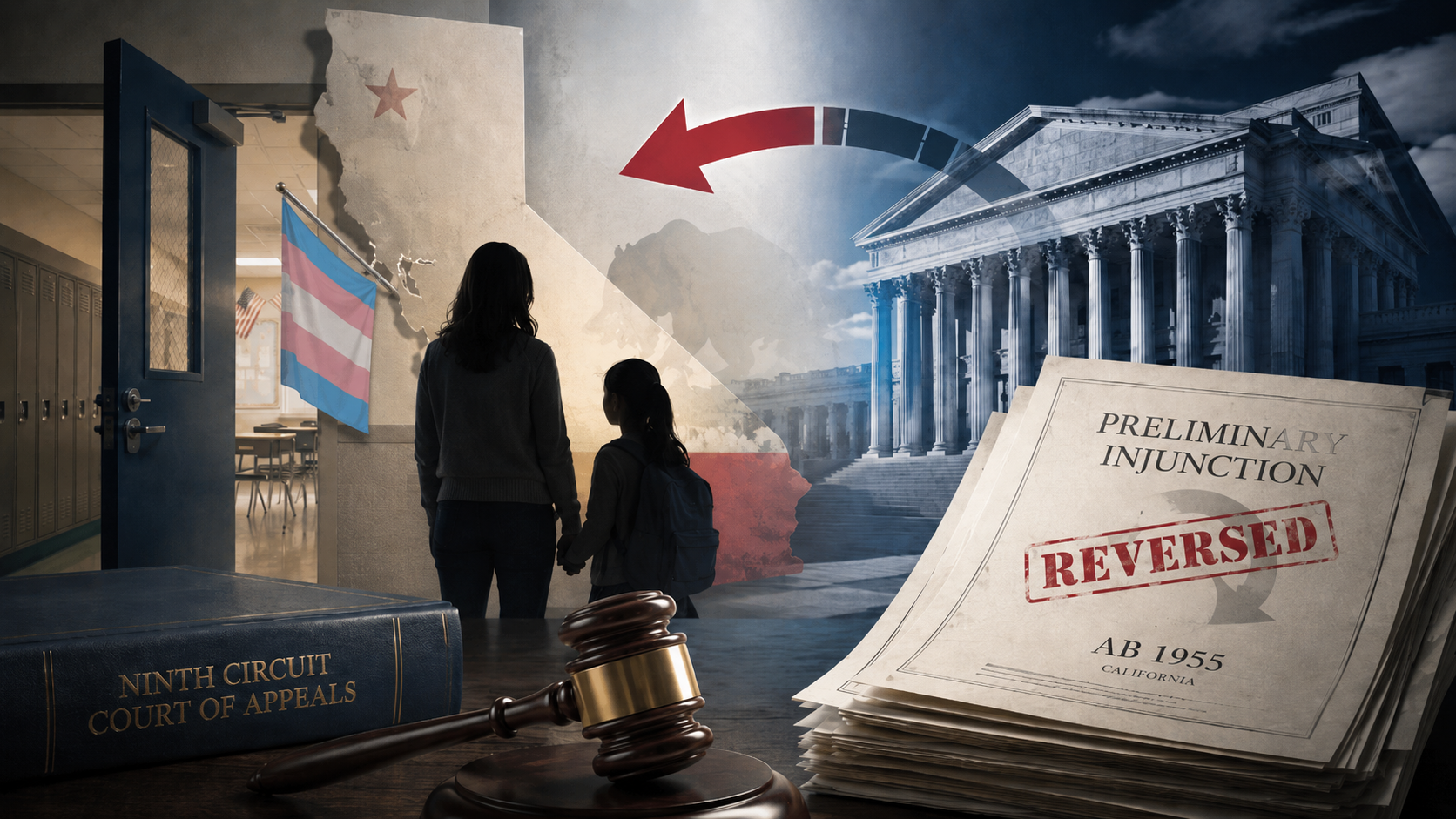
In a surprising turn of judicial events, the Ninth Circuit Court of Appeals reversed its position on a preliminary injunction that partially blocks California’s Assembly Bill (AB) 1955.
In 2024, eight parents filed a lawsuit in the Central District of California, Santa Ana, challenging AB 1955 (“SAFETY” Act), which regulates information regarding a student’s gender identity.
“There is no contention that any of the Movants are unfit parents who present a risk of abuse if they are provided with information about their children exhibiting symptoms of gender dysphoria,” the June 18 ruling states.
The plaintiffs are now empowered to seek and receive information from school employees if their children exhibit symptoms of gender dysphoria at school.
Previously, AB 1955 prohibited school districts and employees from disclosing a student’s sexual orientation, gender identity, or gender expression without the student’s consent.
“Because AB 1955 likely deprives Movants of their constitutional rights, they have shown irreparable harm,” the 10-page opinion states.
The panel of Ninth Circuit justices who presided over the case were Daniel P. Collins, Kenneth K. Lee, and Lucy Koh.
The City of Huntington Beach is a lead Plaintiff-Appellant in the litigation against Gov. Gavin Newsom and the state defendants who argued that the parents lacked standing because they could not prove their own children would identify as transgender.
America First Legal (AFL) represented the City of Huntington Beach and the plaintiff parents.
Related Content:
Vindication of Parental Rights
“The Ninth Circuit’s decision is a powerful vindication of parental rights,” AFL Senior Counsel Nick Barry said in a statement. “California cannot use state law to force schoolteachers and administrators into a conspiracy of silence against parents. California’s law, and similar school policies, use state coercion to intentionally interfere with the parent-child relationship and separate a child from their parent. That is wrong and unlawful.”
In two past decisions, the Ninth Circuit had denied the plaintiffs’ requests for a preliminary injunction based on failing to establish Article III standing.
Article III standing derives from Article III of the U.S. Constitution, which limits federal courts to hearing only actual cases or controversies rather than hypothetical or political arguments
The federal appellate court’s new position unfolded after the U.S. Supreme Court vacated the Ninth Circuit’s previous two stays in Mirabelli v. Bonta.
Under Mirabelli v. Bonta, the nation’s highest court invoked the Fourteenth Amendment’s Due Process Clause in establishing that parents’ have the constitutional right of primary authority over their children’s upbringing and mental health and not the state.
“Reconsidering the standing issue in light of Mirabelli, we conclude that Movants have sufficiently established standing to support preliminary injunctive relief,” the Ninth Circuit’s latest decision states.
The U.S. Supreme Court further established that the substantive due process right of parents “to direct the upbringing and education of their children”… “includes the right not to be shut out of participation in decisions regarding their children’s mental health,” which includes the right to information known to the school about whether “a child exhibits symptoms of gender dysphoria at school.”
Photo Credit: Created with ChatGPT.

Juliette Fairley
Juliette Fairley covers legal topics for various publications including the Southern California Record, the Epoch Times and Pacer Monitor-News. Prior to discovering she had an ease and facility for law, Juliette lived in Orange County and Los Angeles where she pursued acting in television and film.
Join our private
Facebook Group and
ask
local lawyers
a question

Join Our Newsletter
Stay up to date with our latest news and updates.
Join our private Facebook Group and
ask local lawyers a question


Contact Details
ADVERTISING INQUIRIES ONLY 12900 Garden Grove Blvd #132, Garden Grove, CA 92843
(949) 518-0204

Disclaimer: This website is attorney advertising. The information provided on OrangeCountylawyers.com is not legal advice and OrangeCountylawyers.com is not a law firm or a lawyer referral service. No attorney-client or confidential relationship is formed by use of the site and form submissions made to attorney profiles are not confidential. The attorney listings on OrangeCountylawyers.com are paid and/or free attorney advertisements and do not in any way constitute a referral or endorsement by OrangeCountyLawyers.com, parent or affiliate companies, or any approved or authorized lawyer referral service. Your access of/to and use of this site is subject to additional Terms & Conditions. None of the content on this website constitutes a guarantee, warranty or prediction regarding the outcome of any legal matter.
Copyright © 2026 OrangeCountyLawyers.com